
By Naomi Brice, Branch Manager · 7-minute read
Godmanchester is a market town on the River Great Ouse, immediately south of Huntingdon, with continuous settlement stretching back to Roman Britain. It combines a genuinely old town centre – timber-framed cottages, over a hundred listed buildings, riverside meadows – with easy commuter access to Huntingdon, Cambridge and, via Huntingdon station, London. This guide covers what actually living there involves: the schools, the property mix, the commute, and who tends to settle here.
Godmanchester in brief
Godmanchester sits right beside Huntingdon, close enough that the two towns run into each other in places, but Godmanchester has kept a distinct identity – a compact, village-feeling town centre rather than an extension of its larger neighbour. The River Great Ouse runs through the middle of it, and the town’s best-known landmark, the Chinese Bridge, crosses onto a two-acre ornamental island and meadow that’s been a local fixture since the bridge was built in 1827.
A history you can still see
Godmanchester isn’t a town that’s dressed itself up as historic – it actually is. Ermine Street, the Roman road that once ran from London to York, passed directly through the settlement then known as Durovigutum, and archaeological finds from the period – pottery, coins, building remains – are well documented locally. The town received a royal charter from King John in 1212 and a second from King James I in 1604.
That history shows up in the built environment today. Huntingdon Bridge and the parish church of St Mary are both Grade I listed, with several more buildings Grade II* and around 116 further properties Grade II listed. The Post Street conservation area alone covers 124 buildings of special architectural or historical interest, and Earning Street protects another 16, including the timber-framed White Hart inn.
One especially unusual footnote: Farm Hall, an 18th-century house on West Street, was used after the Second World War to intern a group of captured German nuclear scientists, whose conversations were secretly recorded – a genuinely rare piece of Cold War history in an otherwise quiet market town. The Porch Museum, housed in the old Queen Elizabeth Grammar School building on the High Street, covers the town’s history in more depth and is worth a visit for anyone considering the move.
Getting around
Godmanchester’s position immediately south of Huntingdon means most of the practical infrastructure of a larger town – supermarkets, healthcare, retail – is a short journey away, while the town itself stays quieter and more residential. Huntingdon station, on the doorstep, puts London King’s Cross within a realistic commute, which is one of the main reasons the area draws London commuters looking for more space and a slower pace without giving up the ability to get into the city for work. Cambridge is also within easy reach for anyone working there instead.
Schools
Godmanchester has three primary schools within the town itself, and Hinchingbrooke Secondary School, one of the area’s larger and better-known secondaries, sits just over the boundary in Huntingdon, making it a realistic option for Godmanchester families without a house move. For families prioritising schools, it’s worth checking current catchment boundaries and Ofsted ratings directly, since these are reviewed and can shift.
What the property mix actually looks like
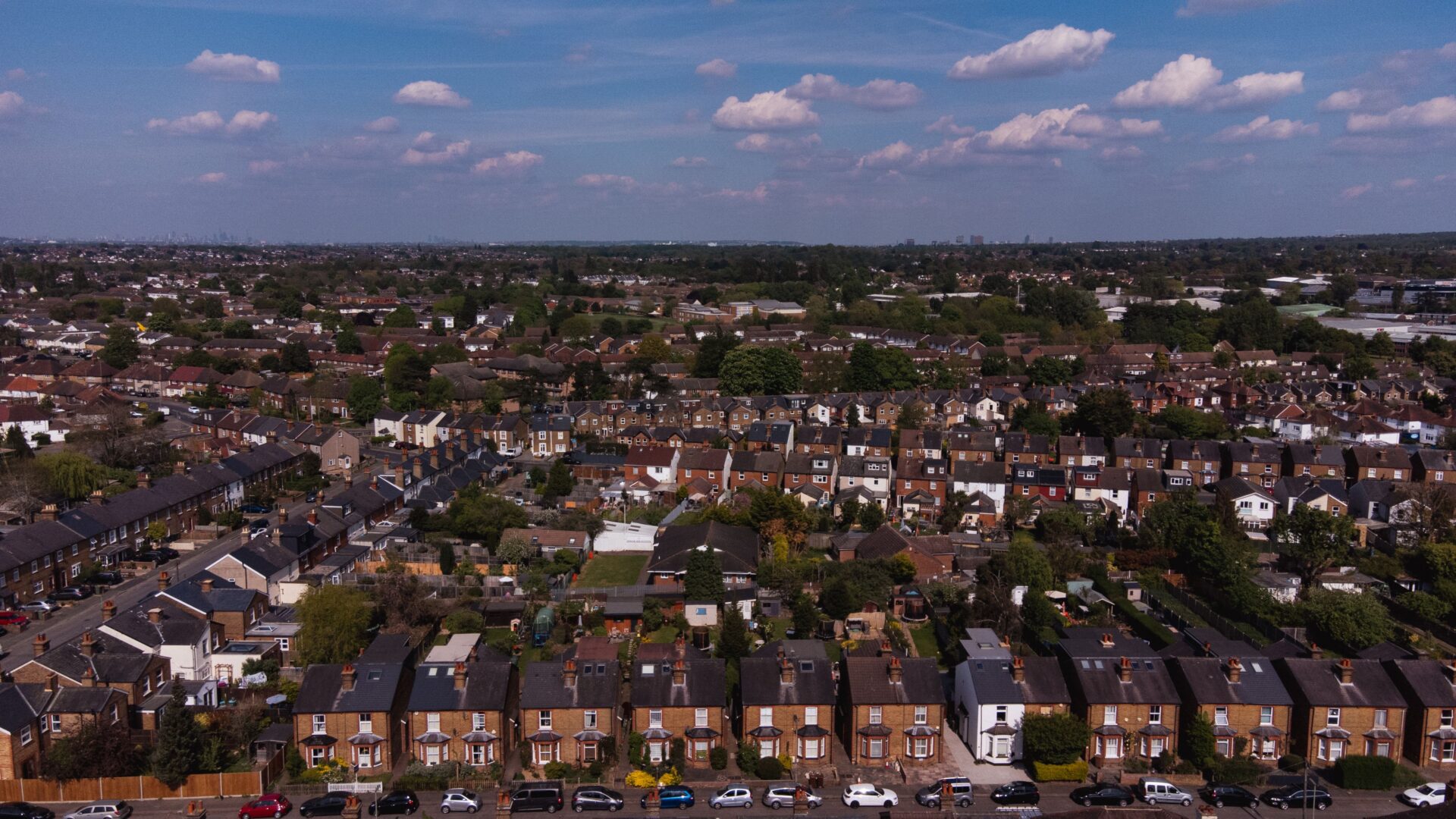
Godmanchester offers more architectural variety than its compact size might suggest. The historic core is dominated by timber-framed cottages and Georgian-fronted townhouses, many within the conservation areas mentioned above, while the wider town includes a genuine mix of more modern housing and new-build development, giving buyers a real choice between a period property with real history behind it and something more practical to run day to day.
This variety matters for anyone weighing up buying here versus a more uniform new-build estate elsewhere in Huntingdonshire: Godmanchester genuinely offers both, within the same small town, rather than forcing a choice between character and convenience.
Community life
Godmanchester runs a genuine calendar of town events from Godmanchester Gala Day to Picnic in the Park and seasonal events, including an Easter egg hunt and a scarecrow competition. The kind of thing that gives a town a settled, community feel rather than functioning purely as a commuter dormitory. The riverside meadows around the Chinese Bridge are a well-used local amenity for walking and general outdoor time, and the town centre has an established pub scene, including The Exhibition, with its garden and open fire, and The Royal Oak.
Who Godmanchester tends to suit
Families drawn to a strong sense of place and a good choice of local primary schools, with secondary provision a short journey away in Huntingdon. Commuters who want a realistic route into London or Cambridge without living inside a larger town. And buyers who specifically want a period property with genuine history, rather than a new-build estate, but still want modern infrastructure within easy reach. It tends to suit people looking to put down roots rather than move again in a couple of years, which shows up in how settled the town feels compared to some of its neighbours.
| Thinking about buying, selling or letting in Godmanchester?
We know this town well — talk to us about what’s currently available, or find out what your Godmanchester property is worth. |
FREQUENTLY ASKED QUESTIONS
Is Godmanchester a good place to live?
It suits people who want a genuinely historic, settled market town with a strong community feel while staying within easy reach of Huntingdon’s wider infrastructure and a realistic commute to Cambridge or, via Huntingdon station, London. It tends to appeal particularly to families and to buyers who want a period property with real character rather than a new-build estate.
What schools are in Godmanchester?
Godmanchester has three primary schools within the town itself. Secondary-age pupils are typically served by Hinchingbrooke Secondary School, just over the boundary in neighbouring Huntingdon. Catchment areas and current Ofsted ratings are worth checking directly and are reviewed periodically, so treat any specific guide, including this one, as a starting point rather than the final word.
How do you commute from Godmanchester to London?
Via Huntingdon station, immediately next door, which runs services toward London King’s Cross — a realistic and popular commute for residents who work in London but want more space and a quieter setting than living in the city. Cambridge is also within easy reach for anyone working there instead.
What kind of properties are in Godmanchester?
A genuine mix: timber-framed cottages and Georgian-fronted townhouses in the historic core and conservation areas, alongside more modern housing and new-build development across the wider town. It offers more architectural variety than its compact size suggests, giving buyers a real choice between period character and modern convenience within the same small town.
Is Godmanchester the same as Huntingdon?
No — they’re neighbouring but distinct towns. Godmanchester sits immediately south of Huntingdon, close enough that the two run into each other in places, but it has kept its own identity as a compact, historic market town rather than functioning as an extension of its larger neighbour, with its own town council, schools and centuries of separate history.
| Whether you’re looking to buy, sell or let in Godmanchester, we know the town and the market here well. |
| “Godmanchester comes up in conversation with buyers and landlords more than almost anywhere else we cover, and it’s easy to see why – it genuinely offers something a lot of nearby towns don’t: real history you can see every day, a strong sense of community, and a commute that actually works. We manage and sell
property across the town regularly, and it’s one of the areas I’d point a family toward without hesitation if they wanted somewhere to settle rather than just somewhere to live.” Naomi Brice, Branch Manager, Belvoir Huntingdon |